quantuM

Personalized Longevity Experience

See the video

quantum

Personalized Longevity Experience

See the video

Therapeutic module

quantum trinity

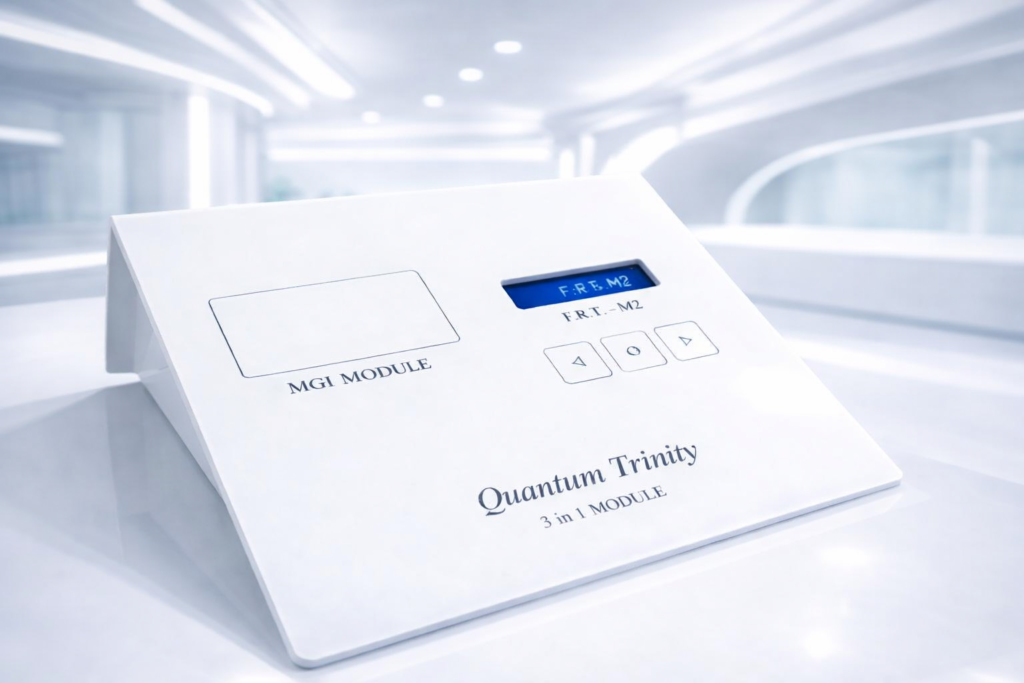
Trinity is an integrated therapeutic device that brings together three complementary modules, designed to act synchronously on the body and the nervous system.

Within a single system, Trinity combines frequency-based and information-based technologies with guided meditation through music and binaural rhythms, supporting the body’s natural regulatory processes.

QUANTUM

POGLEDAJ VIDEO

I am trained as an ophthalmologist and oculoplastic surgeon, and I spent a large part of my career working in research and development for the excimer laser used in LASIK procedures at VISX. At the time, this work was fascinating and groundbreaking. However, one critical fact was not known then — the laser does not destroy viruses.

While treating patients, I worked on a man from India who had significant scarring on his cornea. I used the laser to remove those scars. What we did not know was that this patient had leukemia and carried a high viral load. During the procedure, viral particles were aerosolized from the surface of his eye, passed through my mask, entered my nasal passages, and ultimately reached my brain. As a result, I developed viral encephalitis.

After that event, I could look at a patient and know exactly what was wrong, but I could no longer remember how to write a prescription. I also developed involuntary movements, which made it impossible to continue operating inside someone’s eye. Because of these neurological impairments, I was forced to stop practicing medicine.

I spent most of my time in bed. I had short periods during the day when my mind would clear long enough for me to read and understand something, and then suddenly the clarity would disappear. During those brief moments of clarity, I realized that I would have to find a way to heal myself, because the best physicians I could consult told me that I had multiple viruses in my brain and that there was nothing they could do.

During that time, I began thinking deeply about biology at its most fundamental level. I realized that although cells look different and perform different functions, they all operate according to the same basic principles. I concluded that if I could understand how to restore the function of a single cell, I could restore the function of the entire organism. That realization led me to study cellular biology intensively.

One concept stood out immediately: cells are designed to function within a very narrow pH range. As I studied further, I came to understand that pH is not simply an abstract chemical concept. pH is a way of expressing electrical potential in a liquid, using water as the reference point.

In solid conductors, such as wires, electrical energy flows through electrons moving in metal. In liquids, electricity behaves differently. In aqueous solutions, electrical energy is expressed by whether the solution donates electrons or steals electrons. This property represents electrical potential.

A device commonly referred to as a pH meter is actually measuring this electrical potential. The same value can be displayed either as pH or as electrical potential in millivolts. On the pH scale, a value of 7 represents neutral water. On the electrical scale, the pH range from 1 to 14 corresponds approximately to a voltage range from +400 millivolts to –400 millivolts.

When this relationship is applied to human physiology, it becomes clear that normal biological function occurs in an extremely narrow window. Human tissues function optimally at a pH range of 7.34 to 7.44, which corresponds to an electrical potential of approximately –20 to –25 millivolts relative to water.

This relationship between pH and voltage can be calculated using the Nernst equation, which describes how ion concentration gradients generate electrical potential across membranes. From this perspective, pH is simply another way of describing voltage in a liquid environment.

This realization was pivotal. Cells do not merely require chemistry; cells require sufficient electrical energy — voltage — in order to function. Clinical experience consistently shows that one of the defining characteristics of chronic disease is a loss of electrical potential in a specific organ or system.

The body is constantly breaking down and rebuilding cells. Different tissues regenerate at different rates. Chronic disease develops when the body loses the ability to create new, functional cells. Creating a new cell requires more energy than maintaining an existing one. It also requires all necessary building nutrients simultaneously, as well as the ability to manage toxins that continuously damage tissues.

The human body contains multiple energy systems. Muscles function as a major battery because movement generates electrons. Cell membranes behave like capacitors, storing electrical charge. Inside cells, mitochondria function as rechargeable energy systems, producing ATP. These systems depend on oxygen; without adequate oxygen, energy production becomes inefficient.

As energy and oxygen levels decline, microorganisms that are normally controlled can become active, and chronic inflammation becomes more likely.

The body also has an internal electrical wiring system that distributes energy and information. Disruptions in this system can occur due to scars, chronic infections, dental pathology, and unresolved emotional stress. Teeth, in particular, can act as switches or points of energy loss within these circuits.

Based on clinical experience, infections in the teeth and surrounding bone can significantly disrupt energetic circuits and contribute to chronic disease. Emotional events can also produce long-lasting energetic disturbances that impair the body’s ability to maintain electrical stability.

In summary, the body can be understood as a complex bioelectrical system powered by multiple energy sources. Chronic disease occurs when one or more of these systems can no longer maintain adequate voltage. Healing requires identifying which system has failed, understanding why it failed, correcting the underlying cause, and simultaneously restoring energy, nutrients, oxygen, and detoxification capacity — allowing the body to activate its inherent regenerative mechanisms.

1. f.r.t modul

FERTI is a therapeutic device that uses gentle frequencies and microcurrents to support the nervous system and the body’s energetic processes, helping the body to calm down, restore balance, and activate its own capacity for recovery — on both a physical and mental level.

To better understand this approach, we recommend watching the video in which Dr. Tennant, through his personal experience, explains in an exceptionally clear and accessible way the importance of energy for proper bodily function. After facing serious health challenges himself, working with a device based on the same principles underlying FERTI played a key role in his recovery. His testimony does not present theory, but rather a simple and logical explanation of why energy, nervous system regulation, and cellular potential form the foundation of health.

F.R.T. (Frequency Resonance Therapy) is one of the three therapeutic modules within the Trinity device and is designed as a frequency generator.
Through 26 predefined programs, the system generates a range of frequencies based on microcurrents and very low-intensity alternating current fields, developed to remain compatible with the body’s physiological processes.

For each individual, programs are tested and selected on a personalized basis, allowing real-time assessment of the body’s response and impact on cellular energy, oxygenation, acid–base balance, oxidative stress, and microcirculation—key processes that determine the body’s capacity to cope with high levels of physiological and mental load.

When the body calms down, stress levels decrease, and cells receive more energy and oxygen, the organism gains the opportunity to activate its inherent adaptive and regenerative capacities.

A particular value of this approach lies in the fact that its effects are not assessed subjectively, but are monitored and compared through dual real-time functional analysis, supported by medical software that enables objective functional evaluation of changes within the body.

Electrical currents naturally exist in the human body: cardiac electrical activity is measured using ECG, brain activity through EEG, and muscle activity through EMG.

At the physicists’ conference “EU 2017 Future Scient”, Dr. Jerry Tennant—an ophthalmologist trained in atomic and laser-based plastic surgery—presented his personal research experience while recovering from encephalitis (9). Dr. Tennant stated that all physiological processes in the human body occur within a very narrow pH range, from 7.34 to 7.44, and described pH as a form of fluid voltage.
If we draw an analogy between pH and electrical potential—where a pH range of 1 to 14 corresponds to +400 millivolts to −400 millivolts—the voltage range of −20 to −25 millivolts would correspond to a pH of 7.34 to 7.44 (9). These values can be calculated using the Nernst equation (10,11).

Additionally, based on the early research of Dr. Nakatani (1951), Dr. Reinhold Voll (1952), and North Korean scientist Kim Bong-Han in the 1960s, researchers increasingly believe that the primo-vascular system represents the physical component of the acupuncture meridian system (12).
The effects of frequency resonance therapy, also referred to as transcutaneous electrical nerve stimulation, have been demonstrated in several studies focused on pain relief (13,14).

The FERTI system, an integral part of the Quantum Pod, is designed as a frequency generator that “mimics” frequencies found in nature (amplified within the device). Through specific intermittency patterns, it simulates parasympathetic nervous system activity, thereby exerting an immediate effect on the body—balancing energy levels, stimulating metabolism and circulation, improving cellular oxygen utilization, and rapidly regulating the acid–base balance of bodily fluids, which in turn contributes to the reduction of oxidative stress.
The core of this therapy lies in the application of technology that uses a multidimensional signal to effectively stimulate limited or impaired areas of microcirculation (15–25).

    1. Tatourian A. Electrical Architecture of the Human Body. Available from: https://tatourian.blog/2018/10/22/electrical-architecture-of-the-human-body/
    2. pH measurement. Available from: https://instrumentationtools.com/ph-measurement/
    3. DeCoursey TE. Voltage and pH sensing by the voltage-gated proton channel, HV1. J R Soc Interface. 2018;15(141):20180108.
    4. Nauka je konačno dokazala da postoje akupunkturni meridijani. Available from: https://ortomd.rs/akupunkturni-meridijani/
    5. Gladwell PW, Badlan K, Cramp F, Palmer S. Direct and Indirect Benefits Reported by Users of Transcutaneous Electrical Nerve Stimulation for Chronic Musculoskeletal Pain: Qualitative Exploration Using Patient Interviews. Phys Ther. 2015;95(11):1518-28.
    6. Pivec R, Minshall ME, Mistry JB, Chughtai M, Elmallah RK, Mont MA. Decreased Opioid Utilization and Cost at One Year in Chronic Low Back Pain Patients Treated with Transcutaneous Electric Nerve Stimulation (TENS). Surg Technol Int. 2015;27:268-74.
    7. Kasat V, Gupta A, Ladda R, Kathariya M, Saluja H, Farooqui AA. Transcutaneous electric nerve stimulation (TENS) in dentistry- A review. J Clin Exp Dent. 2014;6(5):e562-8. 
    8. Slavin KV. History of peripheral nerve stimulation. Prog Neurol Surg. 2011;24:1-15. 
    9. Johnson MI, Jones G. Transcutaneous electrical nerve stimulation: current status of evidence. Pain Manag. 2017;7(1):1-4. 
    10. Gibson W, Wand BM, O’Connell NE. Transcutaneous electrical nerve stimulation (TENS) for neuropathic pain in adults. Cochrane Database Syst Rev. 2017;9:CD011976. 
    11. Sluka KA, Walsh D. Transcutaneous electrical nerve stimulation: basic science mechanisms and clinical effectiveness. J Pain. 2003;4(3):109-21. 
    12. Johnson M. Transcutaneous electrical nerve stimulation: review of effectiveness. Nurs Stand. 2014;28(40):44-53. 
    13. Johnson MI, Paley CA, Howe TE, Sluka KA. Transcutaneous electrical nerve stimulation for acute pain. Cochrane Database Syst Rev. 2015;(6):CD006142. 
    14. Miller MA, Palaniswamy C, Sharma D, Reddy VY. Inappropriate shock from a subcutaneous implantable cardioverter-defibrillator due to transcutaneous electrical nerve stimulation. Heart Rhythm. 2015;12(7):1702-3. 
    15. Jauregui JJ, Cherian JJ, Gwam CU, Chughtai M, Mistry JB, Elmallah RK, Harwin SF, Bhave A, Mont MA. A Meta-Analysis of Transcutaneous Electrical Nerve Stimulation for Chronic Low Back Pain. Surg Technol Int. 2016;28:296-302. 
    16. Khadilkar A, Odebiyi DO, Brosseau L, Wells GA. Transcutaneous electrical nerve stimulation (TENS) versus placebo for chronic low-back pain. Cochrane Database Syst Rev. 2008;(4):CD003008. 
    17. Young JD, Spence AJ, Power G, Behm DG. The Addition of Transcutaneous Electrical Nerve Stimulation with Roller Massage Alone or in Combination Did Not Increase Pain Tolerance or Range of Motion. J Sports Sci Med. 2018;17(4):525-532.
QUANTUM

2. mgi modul

MGI is a therapeutic module that serves as a carrier of therapeutic information, obtained through signal testing from a network of 365 micro-generators.

Each micro-generator is connected to a specific electroacupuncture point and carries targeted information designed to induce either sedation or stimulation, depending on the body’s current needs.

These signals act on the regulation of ion channels within the cell membrane, enabling cells to more efficiently release toxins and metabolic byproducts, while supporting the restoration of optimal functional balance.

Understanding MGI Therapy and the Therapeutic Potential of Information

Informational regulation, coherence disruption, and the minimal signal as a therapeutic input


0) Note on Approach and Scientific Integrity (for physicians and partners)

This text is intended to support understanding of the MGI therapy concept within the contemporary view that biological systems function through signaling, feedback loops, and regulation.
Two distinct layers are clearly differentiated:

  • Principles firmly grounded in biology and medicine
    (cellular communication, signaling, neuro–endocrine–immune integration, bioelectrical processes, systemic physiology)

  • Scientific studies and research models developed primarily in Eastern European scientific centers (1970–2006), which within the dominant Western biomedical paradigm are generally classified as research hypotheses and conceptual models rather than standardized clinical protocols, despite long-standing practical application indicating their functional relevance.

In practice, the MGI approach does not require “belief in a theory,” but emphasizes protocol:
baseline → intervention → pre/post measurement → longitudinal follow-up.


1) When the Problem Ceases to Be “Diagnosis” and Becomes “Signal”

There comes a moment when the problem is no longer the diagnosis.
The problem becomes a message.

A message the organism receives daily:
that it is exhausted,
that it is under threat,
that it is overloaded,
that there is no longer room for recovery.

And the body — regardless of disease — always responds to what it receives as input.

Cells do not understand prognosis.
Cells understand information.

If this is so, then the first step is not fighting at all costs, but understanding:
how information is received, interpreted, tested, and used in the body —
so that the organism may once again receive a signal for regulation, stability, and recovery.


2) Information as a Silent Force of Regulation

Information is not an addition to life.
Information is what organizes life.

Every process in the body begins with information.
Not substance.
Not energy.
But signal.

Cells communicate in a language we do not hear — yet one that determines:

  • when something repairs

  • when something stops

  • when something regenerates

  • when something shuts down

DNA is not only a chemical structure.
DNA is memory, program, and instruction.

Every day the body produces vast numbers of new cells.
They are not created randomly.
They are the result of information the system reads and replicates within the context of its current state.

This raises a question that is rarely asked directly enough:

What if the problem is not only “in the cells,” but in the message the cells receive?


3) When Biological Information Is Disrupted, Homeostasis Loses Stability

Stress, fear, trauma, toxins, therapies, and exhaustion
do not act only physically.

They alter information:
regulatory patterns, feedback loops, and the way the organism encodes danger, resources, and recovery.

The body does not stop responding.
But it begins responding incoherently — scattered, dysrhythmic, without coordination.

This is the point at which medicine often says:
“We have done everything we can.”

Yet the organism continues to function.
It functions — in chaos.

And this is where a different question emerges:

Is it possible to support a return to regulatory coherence?


4) Restoring Regulatory Coherence: Not Repair, but Reorganization

Not to “fix” the organism.
Not to “heal it from the outside.”

But to support its ability to once again recognize a pattern of balance.

For decades, research worldwide has explored the idea that:

  • information can exert therapeutic effects

  • minimal signals can trigger adaptive internal responses

  • the body possesses intrinsic regulatory intelligence

This approach does not attempt to replace the body.
It attempts to awaken its own organization.

As when you do not perform the system’s task for it —
but provide the framework and signal for order to re-emerge.


5) Why Hope Is Not Psychological Comfort, but a Biological Factor.

And why it matters that hope is grounded in understanding

For some people, hope comes from faith.
For others, hope comes from understanding.

In both cases, the essence is the same:
when a person begins to understand that the body is not chaotic,
that the cell has its own logic, structure, and order,
hope stops being abstract and becomes a real anchor.

Biology has shown us how a cell functions:
how it takes in nutrients,
how it produces energy,
how it eliminates metabolic waste,
how it communicates with other cells.

The perfection of this system—whether one calls it evolution or divine creation—is not in question.
What is more questionable is forgetting that this system still exists, even when it is burdened by disease.

When a person gains the sense that:

  • they are not left to chance,

  • they are not a passive object,

  • they have room to participate,

the body changes the way it functions.

At that point, hope is no longer just an emotional response.
It becomes a factor that influences processes which are biologically measurable:

  • breathing and oxygenation

  • sleep quality and recovery

  • autonomic nervous system tone

  • hormonal and inflammatory responses

  • the body’s ability to maintain stability under stress

These are not theories.
They are responses that can be observed and measured.

That is why it is important to say this clearly:

Hope is not the opposite of science.
Hope is a condition for biology to have a chance at all.

This approach does not say: “You will be cured.”
It says something more honest:

“Your body still has a voice. Let’s listen to it.”

It does not promise an outcome.
But it opens a process.
It does not claim to have answers to everything.
But it refuses the idea that there are no answers at all.

If you are reading this, you are not here by accident.
You may be tired.
You may be angry.
You may have lost trust.

But the fact that you are still searching means that there is a part of you that has not given up.

This approach is intended for that part:
not to convince you — but to remove obstacles so that therapy and biological processes can do their work.


6) What Matters: Conditions, Signal, and Meaning

The body does not change because it is told it “must.”
The body changes when it receives conditions, signal, and meaning.

If there is even the smallest chance that information can help the body stabilize, slow down, reorganize, or find a new rhythm —
that chance is worth exploring.

And sometimes, that exploration becomes the beginning of something no one could have predicted.

This is where a different perspective on recovery begins.
This is where the question emerges that changes the framework:

Information as a new therapeutic agent.


7) Information as Intervention: From Idea to Logic

The idea that information may hold therapeutic value can seem radically different from conventional approaches.
How could something immaterial influence the body — let alone health?

Before dismissing it, consider the simplest example:

life itself.

Every human begins as a single cell.
That cell divides, organizes, differentiates — producing a fully functional organism.

There is no external planner.
There is precise internal organization.


8) The Healing Intelligence of the Body

Have you ever asked how the body knows what to do?

When you cut yourself, healing begins.
When you catch a cold, defense mechanisms activate.
When exhausted, the body demands sleep.

Without conscious instruction.

The body constantly:

  • removes damaged cells

  • repairs proteins

  • adjusts metabolism

  • eliminates toxins

  • defends against infection

  • attempts to restore balance

One of the core truths of biology is that we are self-organizing systems.

The recurring answer to how is: information.


9) The Body as a Communication Network

In biology — especially biophysics and biochemistry — it is well established that cells do not function in isolation.
They communicate continuously via:

  • chemical signals

  • electrical impulses

  • mechanical and biophysical stimuli

Through this communication, millions of cells act as one — coordinating, adapting, surviving.

When communication is coherent, it is often experienced as:
energy, stability, recovery, inner calm.

When communication is disrupted, the body continues to function —
but more slowly, with greater effort, and under increasing load — often long before symptoms appear.

Professional note (for deeper inquiry)

Cellular communication is an umbrella concept encompassing signaling, bioelectrical processes, and other communication forms essential for coordinated function. Multicellular organisms depend on properly regulated communication to maintain physiology and adapt.


10) A Different Perspective Begins Here

If life is organization,
if health is regulation,
if recovery is restoration of balance —
then it becomes reasonable to ask:

Can intervention occur at the level of information and communication, where everything begins?

This is where the next part of the story begins —
not with promises, but with protocol and response.


11) “Original” and “Copies”: Why DNA Is More Than Chemistry (Narrative Context)

In serious illness, people often think in terms of “damaged cells.”
One fact can be frightening — yet also open space for hope:

The body continuously produces new cells.

These new cells are not random.
They largely reflect the current regulatory state.

If the “original” system is dysregulated, the “copies” inherit that state.

Thus the logic becomes:

If we want a different outcome, we must support a change in regulatory pattern — how the system reads and responds.


12) Non-Invasive Approach: Diagnostics + Harmonization (MGI Framework)

The approach described here is non-invasive and consists of two steps:

  1. assessment — where regulation deviates

  2. balancing intervention (MGI therapy) — to support coherence

The aim is not to attack the body, but to:

  • recognize regulatory overload

  • identify imbalance patterns

  • apply treatment aimed at restoring coherence

When harmony returns, it is not merely a feeling —
it is the possibility for the system to function as an integrated whole, enabling recovery to resume.


13) If the Body Already Has a “Code,” Can We Help It Re-Activate It?

If the body already possesses that code —
can it be helped to hear it again, read it again, activate it again?

To address this without mysticism or marketing, we introduce a framework long present in science but often fragmented across disciplines:

Information in biology is not metaphor — it is an organizing principle.

Three closely related but distinct levels are recognized:

13.1 Bioinformatics: Information in Living Systems

Biological systems possess an informational state and continuously perform processes of reception, encoding, storage, decoding, and application.

The question is not only what a cell is — but how it processes messages.

13.2 Clinical Bioinformatics: Information in Disease and Recovery

This level examines how these processes change during pathogenesis and sanogenesis.

Many patients with serious diagnoses experience something not captured in a single lab value:
loss of rhythm, increased regulatory cost, and absence of spontaneous recovery.

13.3 Information as Therapeutic Intervention

Here emerges the idea that information can act as an intervention: under specific conditions, it may influence physiological, biochemical, biophysical, and pathological processes via reception, memory, and feedback mechanisms.

The distinction is intuitive:

  • pharmacotherapy introduces substance

  • physiotherapy introduces energy

  • informational therapy introduces signal

The point is not magic.
The body already possesses resources (ATP, biochemistry, mediators).
When it receives processable information, it activates internal mechanisms.
Thus the emphasis on minimal input — at the informational level, quality matters more than quantity.


14) Biological “Languages”: How the Body Communicates with Itself

Cells speak multiple languages:

  • DNA/RNA (nucleotides as letters)

  • proteins (amino acids as letters)

  • membranes and signaling systems (ions, mediators)

Crucially, biological information is carried not only by material carriers (molecules), but also by energetic carriers (signals).

Information transfer includes:

  • action potentials and slow waves

  • bioelectrical transmembrane patterns

  • electromagnetic and mechanical components

  • complex system-dependent patterns

The focus shifts from a single substance to regulatory pattern.


15) Disease as Disturbed Information Exchange (Functional View)

Within this framework, disease is not only metabolic error, but often:

  • altered electrical and functional cellular activity

  • changed membrane ion conductivity

  • inhibited ion pumps

  • reduced responsiveness to signals

The system no longer “hears” or “responds” effectively, and struggles to regain balance.

The rational question follows:

If communication is disrupted, can communication be reorganized?


16) Research Hypotheses and Historical Models (1970–2006)

Eastern European research traditions explored broader informational models (wave genetics, holographic models, non-local regulation). These emerged in a specific historical context and remain outside mainstream biomedicine.

Important Note on the Status of Evidence

The models described originate from scientific research developed predominantly within Eastern European scientific and academic centers and do not belong to the mainstream of contemporary Western biomedicine. Within the prevailing Western biomedical paradigm, they are generally regarded as research-based and theoretical frameworks rather than standardized clinical protocols.

In this text, these models are presented as conceptual and research tools for understanding the role of information in biological regulation, and not as clinically validated therapeutic protocols in accordance with current Western regulatory standards, although decades of practical application in clinical and therapeutic settings indicate consistent and meaningful functional outcomes.


17) What Science Already Confirms (Carefully, Honestly)

Firm foundations

  • biology operates via signals and feedback

  • cellular communication underlies coordination

  • organisms function as networks

  • regulation and recovery depend on information quality

Actively researched

  • complex information encoding

  • emergence of coherence

  • effects of minimal stimuli on system response

MGI practical logic
We do not ask for belief.
We ask for response.

Thus the next step is always:
pilot protocol → pre-measurement → intervention → post-measurement → follow-up

If change occurs, it is real — regardless of terminology.

And when someone has heard “there is no solution,” this logic becomes crucial:
if there is even a small chance of re-organization, it is worth exploring.


18) Conclusion: No Promises — Only Protocol

This approach does not sell certainty.
It offers a different framework: regulation as an informational process, observable through minimal, precise inputs and measurable response.

It does not promise.
But it opens a process.
It does not claim answers for everything.
But it refuses the idea that there are no answers at all.

Your body still has a voice.
Let us listen.

MORE INFO….

  1. Anichkov S.V. Neuropharmacology. L.: Medicine, 1982. 384 p.

  2. Anokhin P.K. Fundamental questions of the general theory of functional systems // Principles of systemic organization of functions. M.: Nauka, 1973. pp. 5–61.

  3. Anokhin P.K. Key questions of the theory of functional systems. M.: Nauka, 1980. 197 p.

  4. Ashmarin I.P., Borodkin Yu.S., Bundzen P.V. et al. Memory mechanisms. L.: Nauka, 1987. 431 p.

  5. Bertram G. Katzung. Basic and clinical pharmacology. M.: Binom, 1998. Vol. 1. 612 p.

  6. Bogach P.G., Kurskiy M.D., Kucherenko N.E., Rybalchenko V.K. Structure and the function of biological membranes. K.: Vishcha school, 1981. 335 p.

  7. Bogach P.G., Skrypnyuk Z.D., Burdyga F.V. The role of magnesium ions in regulation electrical processes, contraction-relaxation sensitivity of smooth muscles to acetylcholine // Molecular genetic biophysics, 1980. Vol. 5. pp. 51–56.

  8. Vulfius E.A., Kovalenko V.A. Cholinergic receptors. Biophysics. Outcomes of science and technology. M., 1978. 207 p.

  9. Glebov R.N., Kryzhanovsky G.N. Functional biochemistry of synapses. M.: Medicine, 1978. 325 p.

  10. Golikov P.P. Receptor mechanisms of the glucocorticoid effect. M.: Medicine, 1988. 286 p.

  11. Zeimal E.V., Shelkovnikov S.A. Muscarinic cholinergic receptors. L.: Nauka, 1989. 288 p.

  12. Ichas M. Biological code. M.: Mir, 1971. 351 p.

  13. Klevets M.Yu. Electrical power of secretory cells of gastric glands and mechanisms of activation of extrusion and enzymes. Author’s abstract, Doctor of Biol. Sciences. Kiev, 1993. 40 p.

  14. Klimov P.K. Peptides and the digestive system. L.: Nauka, 1983. 273 p.

  15. Komissarov I.V. Elements of the theory of receptors in molecular pharmacology. M.: Medicine, 1969. 215 p.

  16. Kostyuk P.G. Calcium and cellular excitability. M.: Nauka, 1986. 255 p.

  17. Natochin Yu.V. Intracellular signal transmission in the mechanism of antidiuretic action of vasopressin // Intracellular signaling. M.: Nauka, 1988. pp. 113–118.

  18. Nozdrachev A.D. Physiology of the autonomic nervous system. L.: Medicine, 1983. 295 p.

  19. Rosen V.B., Smirnov A.N. Receptors and steroid hormones. M.: Moscow University Publishing House, 1981. 310 p.

  20. Sergeev P.V. Receptors of physiologically active substances. M.: Medicine, 1987. 397 p.

  21. Skok V.I., Shuba M.F. Neuromuscular physiology. K.: Vischa school, 1986. 223 p.

  22. Skrypnyuk Z.D. Transmembrane electrical processes and contraction-relaxation of smooth muscles at various ratios of magnesium and calcium ions in the environment. Author’s abstract, Cand. Biol. Sciences. Kiev, 1976. 20 p.

  23. Skrypnyuk Z.D. Mechanisms of hormonal regulation of electrical and contractile activity of smooth muscles. Diss. Doctor Biol. Sciences. Kiev, 1989. 299 p.

  24. Skrypnyuk Z.D. Informational and negentropic therapy // Informational and negentropic therapy. 1994. No. 1. pp. 4–8.

  25. Skrypnyuk Z.D. Basic concepts of traditional Chinese medicine from the point of view of information therapist // Informational and negentropic therapy. 1994. No. 1. pp. 19–24.

  26. Skrypnyuk Z.D. Some mechanisms of receiving pain signals (pain information) by effector cells // Informational and negentropic therapy. 1995. No. 2. pp. 15–24.

  27. Skrypnyuk Z.D. Problems and tasks of bioinformatics for 10 years. Kiev, 1999 A. pp. 80–83.

  28. Skrypnyuk Z.D. Bioinformatics: subject and department // Informational and negentropic therapy. 1999 B. pp. 82–83.

  29. Skrypnyuk Z.D. “Alphabet”, “letters” and “sounds”, “words” and “speech” of cellular “languages” // Informational and negentropic therapy. 2000. pp. 81–83.

  30. Skrypnyuk Z.D. Phonetics, morphology and syntax of cellular languages // Informational and negentropic therapy. 2001. pp. 135–136.

  31. Skrypnyuk Z.D. Clinical bioinformatics: subject and tasks // Informational and negentropic therapy. 2005.

  32. Sudakov K.V. General theory of functional systems. M.: Medicine, 1984. 224 p.

  33. Sudakov K.V. Information principle in physiology: analysis from the standpoint of the general theory of functional systems // Advances in physiological sciences, 1995. Vol. 26, No. 4. pp. 3–26.

  34. Chailakhyan L.M. What is an subject “BIOINFORMATICS”? // Biophysics, 2005, Vol. 50, No. 1, pp. 152–155.

  35. Bogach P.G., Skrypnyuk Z.D. Role of Mg and Ca ions and their interrelation in regulating the transmembrane electrical processes and contraction-relaxation of smooth muscle // Abstract of 27-th Intern. Congr. of Physiological Sciences. Paris, 1977. p. 84.

  36. Crick F.H. The genetic code, Sci. Am. 1962. 207. pp. 66–74.

3. Sound MODUL

The third module of the Trinity device uses sound and music as therapeutic tools to support the nervous system and inner balance.

Through carefully selected frequencies and guided meditation, this module helps the body and mind calm down, align, and more easily enter a state of recovery.

Sound Therapy and Guided Musical Meditation

Sound is one of the most subtle—yet powerful—tools for supporting health and physiological balance. Unlike many other stimuli, sound has no boundaries: it fills the space and reaches every cell, acting simultaneously on both the body and the mind.

For this reason, music is an integral part of the Quantum system and the Trinity device. For thousands of years, it has been used as a natural support for recovery processes—helping to reduce tension, improve mood and focus, and restore energy.

Contemporary research confirms that music can influence brain activity, slow breathing and heart rate, reduce stress levels, and alleviate the effects of chronic psychophysical strain. In addition, sound therapy has been associated with blood pressure regulation, immune support, and the reduction of anxiety and depressive symptoms.

Within the Trinity device, beneath a carefully curated musical soundscape, there are also subtle, barely audible base tones designed to further support the body and the nervous system. These tones act through a process known as entrainment—the natural synchronization of the body’s internal rhythms with an external auditory stimulus.

Two frequencies are used in particular:

  • 7.83 Hz (Schumann resonance) — a frequency corresponding to the Earth’s natural electromagnetic rhythm, contributing to a sense of grounding, calmness, and stability during therapy.

  • 40 Hz (gamma frequency) — associated with higher levels of brain activity, focus, and integration of cognitive functions, supporting mental clarity and optimal performance.

By combining music, guided meditation, and precisely selected frequencies, this Trinity module helps the organism relax, synchronize, and more easily enter a state in which recovery, regeneration, and inner balance are naturally supported.

Diagnostics

HSDC (Hardware–Software Diagnostic System) – Bioresonance Functional Screening enables assessment of the body’s functional state through its bioelectrical responses—offering insight into regulation, adaptation, and hidden patterns of physiological load.

HSDC (Hardware–Software Diagnostic System) is a medical device used to evaluate the functional condition of organs and organ systems, with a focus on the body’s regulatory and adaptive capacity—before changes manifest as symptoms.

The method is based on measuring DC conductivity (direct current electrical conductivity) at precisely defined zones on the body, which are connected to internal organs and systems through neural and reflex pathways.

What does DC conductivity mean?

DC conductivity represents the ability of tissue to conduct a weak, stable direct electrical current.
This value directly depends on:

  • the condition of the cell membrane

  • membrane potential

  • functional sensitivity of receptors

  • the balance between tissue stimulation and exhaustion

In other words, what is measured is not the structure of an organ, but the way it functions at the cellular and regulatory level.


How HSDC measurement works

During analysis, a low-intensity signal is recorded through more than 30 leads, using electrodes placed on the forehead, hands, and feet.
Measurements are performed through multiple automated cycles, eliminating subjective operator influence and ensuring high repeatability of results.

Skin receptors in these zones emit and respond to electromagnetic signals and are part of the metameric structure of the body, through which the functional state of internal organs is reflected on the skin surface.


What this analysis provides

The recorded data enable:

  • assessment of membrane potential strength

  • insight into cellular receptor sensitivity

  • identification of overload, exhaustion, or regulatory imbalance

  • understanding how the organism is currently responding to stress, therapies, and internal demands

This analysis does not establish a diagnosis. Instead, it provides an objective insight into the functional state of the organism, serving as a foundation for:

  • personalization of therapeutic modules (F.R.T., MGI, sound therapy)

  • monitoring changes before and after intervention

  • decision-making based on measurement rather than assumption


Why HSDC is a key component of the Trinity system

HSDC allows the therapeutic process to be guided not by subjective sensation, but by measurable changes in the body’s regulatory state.
This makes every subsequent step more precise, meaningful, and aligned with the organism’s real-time condition.

No guessing.
No universal protocols.
Clear insight into how the body is functioning right now.


Scientific Background — Bioelectrical principles and functional diagnostics

Modern concepts of functional diagnostics, such as the HSDC system, are based on well-documented biological principles linking bioelectrical signals, membrane potential, and cellular regulation. Electrical potential is not limited to neuronal impulses; it exists in all cells and tissues and plays a central role in coordinating biological processes and adaptation.


1. Bioelectrical signals and membrane potential

Every cell in the body generates and responds to a transmembrane voltage gradient (membrane potential), created by ion movement across the cell membrane via ion channels, pumps, and transporters.
This potential is not used solely for nerve transmission—it acts as a signal influencing gene expression, growth, differentiation, migration, and overall cellular behavior.

In biological systems, changes in bioelectrical parameters regulate processes such as tissue development, regeneration, cellular organization, and growth dynamics. Cell membranes and their electrical properties function as communication channels shaping cellular function.


2. Electrical properties of the skin and electrodermal activity

The skin is an electrically active surface; electrical signals measured at the skin reflect changes in the autonomic nervous system and internal bioelectrical activity. This phenomenon is known as electrodermal activity (EDA) and is assessed through changes in skin electrical potential or conductivity.

EDA is widely used in scientific and clinical research to assess:

  • autonomic nervous system activity

  • emotional and physiological changes

  • functional tissue states related to sweat glands and neural innervation

These measurements are objective, non-invasive, and quantitative. They do not diagnose disease but provide insight into the organism’s current regulatory state.


3. DC conductivity and functional organ assessment

DC conductivity measurement provides a quantitative evaluation of tissue ability to conduct very low-intensity direct current. This depends on membrane electrical properties and ion-channel behavior and may reflect:

  • membrane potential

  • metabolic activity

  • altered stress and adaptation responses

  • changes in functional regulation of tissues and systems

Such measurements are not equivalent to clinical diagnosis but represent an indirect insight into how the organism is functioning and responding to internal and external challenges.


4. Biological significance of bioelectrical signals

Bioelectrical signals are more than numerical values—they are a readable code through which cells communicate, coordinate, and regulate processes. Research has shown their involvement in embryonic development, tissue regeneration, and even large-scale structural organization.

For example:

  • bioelectrical patterns are linked to regulation of cell differentiation and proliferation

  • membrane potential changes influence cellular behavior during growth and adaptation

  • specific bioelectrical patterns are associated with regenerative processes in animals such as salamanders and frogs (historical models in bioelectrical research)


5. Conclusion: information as a therapeutic principle

In functional diagnostics, information obtained from electrical measurements does not represent “energy therapy,” but an objective assessment of the organism’s regulatory dynamics.
Rather than relying on psychological interpretation or speculative explanations, this approach uses recorded physiological signals to indicate how the system is currently functioning and how it can be optimally supported. More info….


1️⃣ McLaughlin KA et al.

Bioelectric Signaling in Regeneration: Mechanisms of Ionic Controls of Growth and Form
📌 PubMed Central (PMC)
🔗 https://www.ncbi.nlm.nih.gov/pmc/articles/PMC5452225/


2️⃣ Harris MP

Bioelectric signaling as a unique regulator of development and regeneration
📌 PubMed Central (PMC)
🔗 https://www.ncbi.nlm.nih.gov/pmc/articles/PMC6461841/


3️⃣ Zhu X.

Electrodermal activity and its molecular mechanisms
📌 The Innovation Life, 2024
🔗 https://www.sciencedirect.com/science/article/pii/S2666675823000487

(Napomena: The Innovation Life je Elsevier-ov journal, ScienceDirect platforma)


4️⃣ Electrodermal Activity – Wikipedia

📌 Opšti pregled, terminologija i istorijat
🔗 https://en.wikipedia.org/wiki/Electrodermal_activity


5️⃣ Levin M.

Bioelectric signaling: Reprogrammable circuits underlying morphogenesis
📌 ScienceDirect
🔗 https://www.sciencedirect.com/science/article/pii/S0960982219300421

(Cell / Current Biology related publications – Michael Levin je jedan od vodećih autora u ovoj oblasti)


6️⃣ Robert O. Becker

The Body Electric / Current of Injury & Bioelectric Regeneration
📌 Klasični radovi i koncept

🔹 Sažetak i pregled Beckerovog rada:
🔗 https://pubmed.ncbi.nlm.nih.gov/11012382/

🔹 Referenca na knjigu The Body Electric:
🔗 https://archive.org/details/bodyelectric00robe

🔹 Dodatni pregled koncepta „current of injury“:
🔗 https://www.ncbi.nlm.nih.gov/pmc/articles/PMC3187600/

QUANTUM